
Computational Mathematics is a dynamic and interdisciplinary field that combines the power of mathematics, computer science, and advanced computational techniques to solve complex real-world problems. It focuses on the development and application of mathematical models, numerical methods, algorithms, and data analysis techniques to address challenges in science, engineering, technology, finance, healthcare, and research. The field plays a crucial role in modern technological advancement, enabling professionals to transform theoretical mathematical concepts into practical computational solutions. From scientific simulations and artificial intelligence to cybersecurity, machine learning, and big data analytics, computational mathematics serves as the foundation for many cutting-edge innovations shaping today’s digital world. Professionals in this domain are highly valued for their analytical thinking, problem-solving abilities, and programming expertise. They contribute significantly to industries such as information technology, aerospace, defense, finance, telecommunications, software development, and research organizations. Their work supports critical applications including weather forecasting, cryptography, financial modeling, robotics, image processing, and computational science
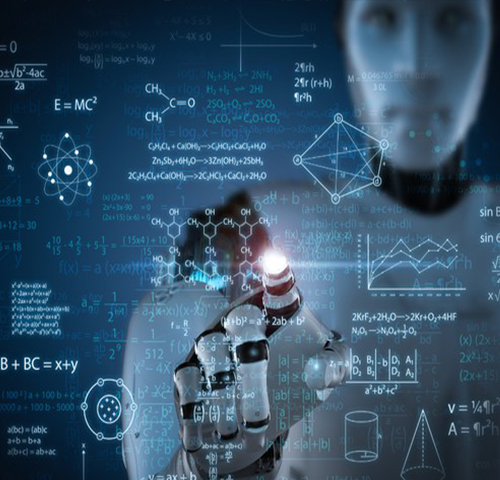
Mathematics forms the backbone of engineering, providing the theoretical foundations upon which practical applications are built. However, the limitations of pure theory often necessitate engineering-based solutions to bridge the gap between abstract concepts and real-world implementation. Computational mathematics emerges as the refined form of addressing this gap, enabling the translation of mathematical models into executable algorithms and simulations. As technology continues to advance, the demand for computational mathematicians will soar, with PhD-holding professors in this field expected to occupy a large portion of the teaching market. Their expertise in integrating mathematical theory with computational techniques will be instrumental in shaping the next generation of engineers. To generate truly skilled and versatile engineers capable of tackling complex challenges, a strong grounding in computational mathematics will become an indispensable component of engineering curricula. By mastering this discipline, students will gain the ability to transform abstract ideas into tangible, practical solutions, propelling the field of engineering to new heights of innovation and impact.
Step 1: Make online Application at http://www.technoindiauniversity.ac.in
Step 2: Complete application form with every detail. Submit your Registered mail- id and mobile number to receive our confirmation
Step 3: Acknowledgement of application through sms and email.
Step 4: Confirmation of appearing in examination will be sent via email or sms after filling up form. A unique application id will be generated. Candidate is required to appear for entrance examination with the id.
Step 5: Final Admission and Registration with payment of requisite fees.
Our current application areas include optimization techniques applied to intelligent systems such as transportation networks, energy grids, and supply chains. Students study how mathematical optimization improves efficiency, reduces cost, and enhances performance in complex, real-time environments
We explore how mathematical frameworks enable systems to adapt and evolve based on incoming data. Students are trained to design models that continuously update and improve, supporting applications in autonomous systems, environmental monitoring, and intelligent automation
Our current application areas include the mathematical foundations of modern cryptography, ensuring secure communication in digital systems. Students learn how number theory and algebraic structures are applied in encryption, cybersecurity, and emerging quantum-resistant protocols